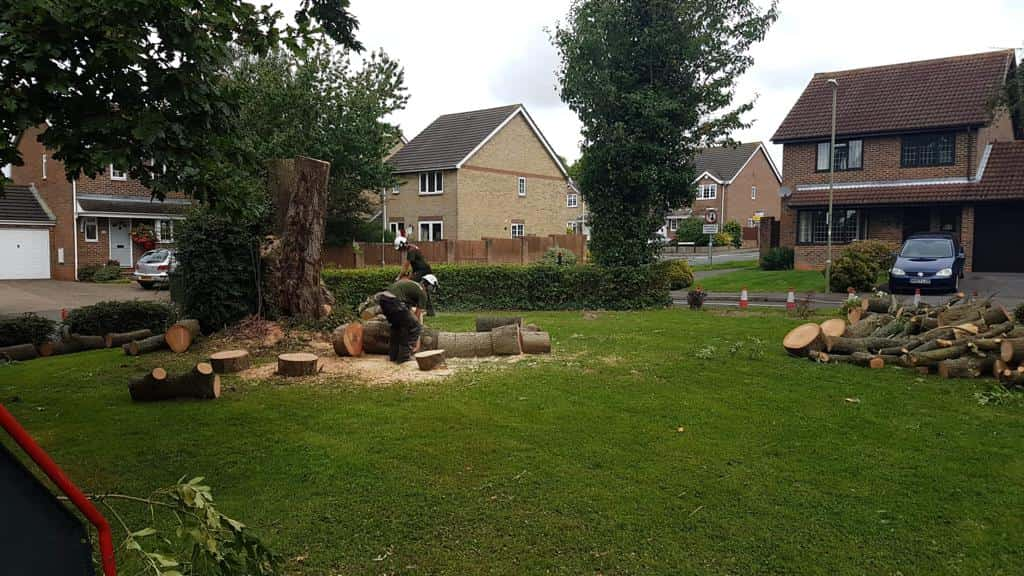
Healthy trees are a valuable part of Southsea’s residential gardens and outdoor spaces, providing structure, shade, and long-term environmental benefits. However, many property owners assume that cutting branches automatically weakens a tree. In reality, when carried out correctly, professional tree cutting plays a vital role in improving branch strength, encouraging balanced growth, and reducing the risk of future failure.
At LM Tree Surgery Southsea, we regularly help homeowners and landowners across Southsea, Hampshire maintain safer, stronger trees through carefully planned tree cutting techniques designed to support long-term structural health.
Understanding How Trees Develop Branch Strength
Trees respond dynamically to their environment. Branches strengthen over time as they adapt to weight, wind movement, and seasonal growth patterns. Problems arise when growth becomes unbalanced, overcrowded, or structurally weak. Heavy limbs, competing branches, or poorly formed unions can place excessive stress on a tree’s framework, increasing the likelihood of breakage.
Tree cutting is not about removing growth indiscriminately. Instead, it is a controlled process that guides how a tree distributes energy, develops supportive tissue, and reinforces key structural points.
Removing Weak Growth to Support Stronger Limbs
One of the most effective ways tree cutting improves branch strength is by removing weak, poorly attached, or competing branches. These can include:
- Branches with narrow or weak unions
- Crossing or rubbing limbs
- Excessively long or unbalanced growth
- Dead or declining branches
When weaker growth is removed, the tree redirects nutrients and energy towards healthier, well-positioned branches. Over time, this leads to thicker branch development, improved wood density, and better overall stability.
Reducing Excess Weight and Mechanical Stress
Heavy branches place continuous strain on attachment points, particularly during high winds or heavy rainfall. Strategic tree cutting reduces unnecessary weight while preserving the tree’s natural shape. This reduction in load allows remaining branches to respond by developing stronger supporting tissue around joints and branch collars.
In coastal areas such as Southsea, where wind exposure is a common concern, managing branch weight is especially important. Proper cutting helps trees flex more naturally in strong winds rather than resisting movement and snapping.
Encouraging Balanced and Even Growth
Trees that grow unevenly are more likely to develop structural weaknesses. When one side becomes heavier or more dominant, the imbalance increases stress across the trunk and primary limbs.
Professional tree cutting restores balance by shaping growth evenly throughout the canopy. This encourages symmetrical development, allowing branches to strengthen at a consistent rate and reducing the likelihood of sudden limb failure over time.
Improving Light Penetration and Airflow
Dense canopies can cause internal branches to weaken due to limited light and poor air circulation. Tree cutting opens up the canopy, allowing light to reach inner growth and improving airflow throughout the structure.
This environment supports healthier branch development, reduces moisture retention, and lowers the risk of decay. Stronger, well-lit branches are better equipped to thicken and reinforce themselves naturally.
Supporting Natural Defence and Healing Processes
When cuts are made correctly, trees respond by forming protective growth around the cut area. This process strengthens the surrounding wood and helps the tree maintain its structural integrity.
Poor or excessive cutting can interrupt this process, which is why professional knowledge is essential. At LM Tree Surgery Southsea, all cutting is carried out with a clear understanding of how trees compartmentalise wounds and reinforce surrounding tissues over time.
Preventing Future Structural Problems
Proactive tree cutting addresses minor structural issues before they develop into major concerns. By correcting growth patterns early, trees are less likely to produce weak limbs or hazardous formations in the future.
This approach not only improves branch strength but also contributes to a longer-lasting, healthier tree that requires less intensive intervention later on.
Why Professional Tree Cutting Matters in Southsea
Trees in Southsea face specific challenges, including coastal weather conditions, restricted garden spaces, and proximity to buildings. Each tree requires an individual approach that considers species, age, condition, and surroundings.
Professional tree cutting ensures that work is carried out with long-term tree health in mind, rather than short-term appearance. Poorly executed cutting can lead to weak regrowth, structural imbalance, and increased risk over time. Choosing an experienced local specialist helps protect both the tree and the surrounding environment.
Conclusion
Tree cutting, when done correctly, is a powerful tool for improving branch strength and overall tree stability. By removing weak growth, reducing excess weight, and encouraging balanced development, trees are better equipped to grow stronger, healthier, and safer over time.
For property owners in Southsea, Hampshire, investing in professional tree cutting is an investment in the long-term health of their trees. If you would like expert advice or tailored tree care solutions, LM Tree Surgery Southsea is on hand to assess your trees and recommend the most appropriate approach to support their strength and longevity.
Call us on: 023 8235 3277
Click here to find out more about LM Tree Surgery Southsea
Click here to complete our contact form and see how we can help with your tree needs.