Healthy trees enhance gardens and outdoor spaces, providing shade, supporting wildlife and adding natural character to a property. However, as trees grow and age, some branches may die, become damaged or stop producing healthy foliage. Leaving these branches in place can affect the tree’s appearance and may create safety concerns if they become unstable.
Tree pruning is an important part of maintaining healthy, well-structured trees. By selectively removing dead or damaged branches, a tree surgeon can help reduce potential hazards, improve the tree’s structure and support its long-term management.
For property owners in Southsea, Hampshire, understanding when deadwood removal is beneficial can help keep trees in good condition. LM Tree Surgery Southsea provides professional tree care services tailored to the condition and requirements of individual trees.
Why Do Tree Branches Die?
Dead branches can develop for several reasons, and understanding the underlying cause helps determine whether further tree care is needed.
Natural ageing is one possibility, as some lower or shaded branches gradually receive less sunlight and die back. Environmental stress, prolonged dry conditions, root damage, disease and physical injuries can also affect branch health.
In some cases, a branch may die while the rest of the tree remains healthy. However, widespread deadwood, sudden changes in the canopy or repeated branch dieback may indicate a more significant problem.
A professional assessment can help distinguish normal growth patterns from signs of disease, structural damage or other conditions that require attention.
How Removing Dead Branches Can Improve Tree Health
Deadwood removal offers several practical benefits when carried out appropriately. The exact benefits depend on the tree’s condition, species and the reason the branches have died.
Reduces the Risk of Falling Branches
Dead branches can become brittle and may break away as they deteriorate. This can be particularly concerning when branches extend over garden paths, driveways, seating areas or buildings.
Removing suitable deadwood helps reduce the risk associated with unstable branches. It also allows a tree surgeon to inspect nearby growth for cracks, weak attachments or other structural concerns that may not be obvious from the ground.
Where large branches are damaged or hanging precariously, professional attention is important because they may fall unpredictably.
Helps Maintain a Healthy Tree Structure
A tree’s structure influences how it distributes weight and develops as it grows. Dead or damaged branches can affect the canopy’s appearance and may create additional maintenance concerns, particularly where branches overlap or interfere with healthy growth.
Selective pruning removes unwanted growth while preserving suitable branches that contribute to the tree’s natural shape. The aim is not to remove as much material as possible, but to make carefully considered cuts that support the tree’s structure.
Excessive pruning should be avoided because removing too much foliage can place unnecessary stress on a tree.
Supports the Management of Disease
Dead branches can sometimes be associated with fungal infections, bacterial diseases or other tree health problems. Removing affected material may help manage certain conditions, depending on the cause and the type of tree involved.
However, deadwood is not always a sign of disease, and pruning alone will not resolve every underlying problem. If a tree shows extensive dieback, unusual leaf discolouration or damaged bark, further assessment may be needed to identify the cause.
A qualified tree surgeon can recommend suitable action based on the symptoms and the overall condition of the tree.
Improves Airflow and Light Within the Canopy
When dead branches accumulate within a dense canopy, selective pruning can help improve its overall structure and reduce unnecessary congestion. Depending on the tree, this may also allow more natural light to reach surrounding areas.
The objective is to remove dead or unsuitable growth without unnecessarily disturbing healthy branches. Good pruning preserves the tree’s natural form and avoids creating large wounds that could affect its condition.
Keeps Gardens and Outdoor Spaces Well Maintained
Dead branches can make a tree appear neglected and may leave loose debris around the garden. Removing them can improve the tree’s appearance and help maintain a tidier outdoor space.
This is particularly useful where trees are close to homes, pathways or frequently used parts of a garden. Regular maintenance can also help identify other issues before they become more difficult to manage.
Signs That Your Tree May Need Deadwood Removal
Some dead branches are easy to identify, while others may be hidden within the canopy. Look for warning signs such as:
- Bare branches that show no signs of life during the appropriate growing season.
- Brittle limbs or branches with visibly damaged bark.
- Cracked or hanging branches.
- Dead growth scattered throughout the canopy.
- Sudden or widespread branch dieback.
- Broken limbs following strong winds or severe weather.
A single dead branch does not necessarily mean the entire tree is unhealthy. However, repeated or extensive dieback warrants closer inspection, particularly if the tree is near buildings or areas used by people.
If a large branch appears unstable, keep clear of the area and arrange professional assistance rather than attempting to remove it yourself.
Why Professional Tree Pruning Matters
Effective pruning requires an understanding of tree biology and how different cuts influence future growth. Removing branches in the wrong places can damage the tree, create large wounds or encourage weak regrowth.
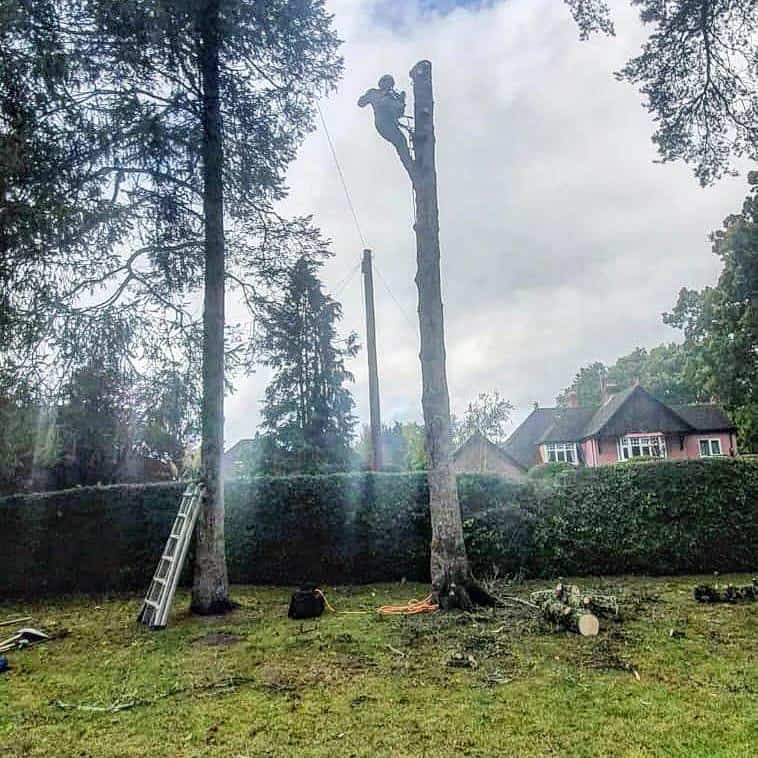
Professional tree surgeons assess which branches should be removed, where cuts should be made and how much material can be taken away without compromising the tree’s structure. They also use suitable equipment and working methods to manage branches safely, especially when working at height.
For homeowners in Southsea, Hampshire, professional pruning can help maintain tree health while addressing deadwood and other developing concerns. The appropriate approach depends on the species, age, condition and position of each tree.
How Often Should Dead Branches Be Removed?
There is no single maintenance schedule suitable for every tree. Some trees develop deadwood gradually, while others may need attention after storms, disease or physical damage.
Periodic visual checks can help identify changes, but trees with extensive deadwood, unusual dieback or branches close to buildings may need a professional assessment sooner. Regular inspections are particularly valuable when a tree’s condition changes or its surroundings become more heavily used.
Prompt attention helps ensure that pruning is based on the tree’s current needs rather than waiting until damaged branches become a more serious concern.
Conclusion
Removing dead branches is an important aspect of tree maintenance. When carried out correctly, deadwood removal can reduce the risk of falling branches, improve tree structure, help manage certain health problems and maintain the appearance of outdoor spaces.
LM Tree Surgery Southsea provides professional tree care services in Southsea, Hampshire, helping property owners assess their trees and identify suitable pruning work. If you have noticed dead branches, damaged limbs or signs of declining tree health, contact the team to discuss your requirements and arrange a professional assessment.
Call us on: 023 8235 3277
Click here to find out more about LM Tree Surgery Southsea
Click here to complete our contact form and see how we can help with your tree needs.